

Warning Signs That My Knee Pain Requires an Urgent Care Visit to Scotch Plains Medical Center
Scotch Plains Medical Center
March 3, 2026 • 6min
Knee pain can be debilitating, making it difficult to move, exercise, or even carry out your daily activities. While some knee discomfort may improve with rest, other times, it can signal a more serious problem requiring immediate medical attention. If you are experiencing knee pain that is persistent, severe, or accompanied by other troubling symptoms, it’s essential to know when it’s time to seek medical care.
At Scotch Plains Medical Center, we specialize in diagnosing and treating knee pain to help you return to your normal activities as soon as possible. In this blog, we’ll outline the warning signs that your knee pain may require an urgent visit to a knee pain doctor near me. Understanding these signs will help you make an informed decision about when to seek professional care and prevent long-term damage to your knee.
Common Causes of Knee Pain
Before diving into the warning signs, it’s essential to understand some of the most common causes of knee pain. Knees are complex joints that endure significant stress each day. Whether you’re walking, running, or simply standing, your knees support your weight and allow you to move. Some common causes of knee pain include:
- Osteoarthritis: Wear and tear of the cartilage in the knee joint, often seen in older adults.
- Injuries: Sprains, strains, or tears to ligaments, tendons, or meniscus cartilage.
- Tendinitis: Inflammation of the tendons in the knee due to overuse or repetitive motion.
- Bursitis: Inflammation of the small, fluid-filled sacs (bursae) around the knee joint.
- Patellofemoral Pain Syndrome: Pain around the kneecap, often caused by overuse or improper alignment.
While most cases of knee pain can be managed conservatively, certain signs indicate that the issue may be more severe and needs prompt medical attention.
Warning Signs You Need to See a Knee Pain Doctor Near Me
It’s crucial to listen to your body when it comes to knee pain. While mild discomfort may improve with rest and self-care, certain symptoms warrant an urgent care visit to avoid further complications. Here are some warning signs that might make you consider the best ‘knee pain doctor near me’ online:
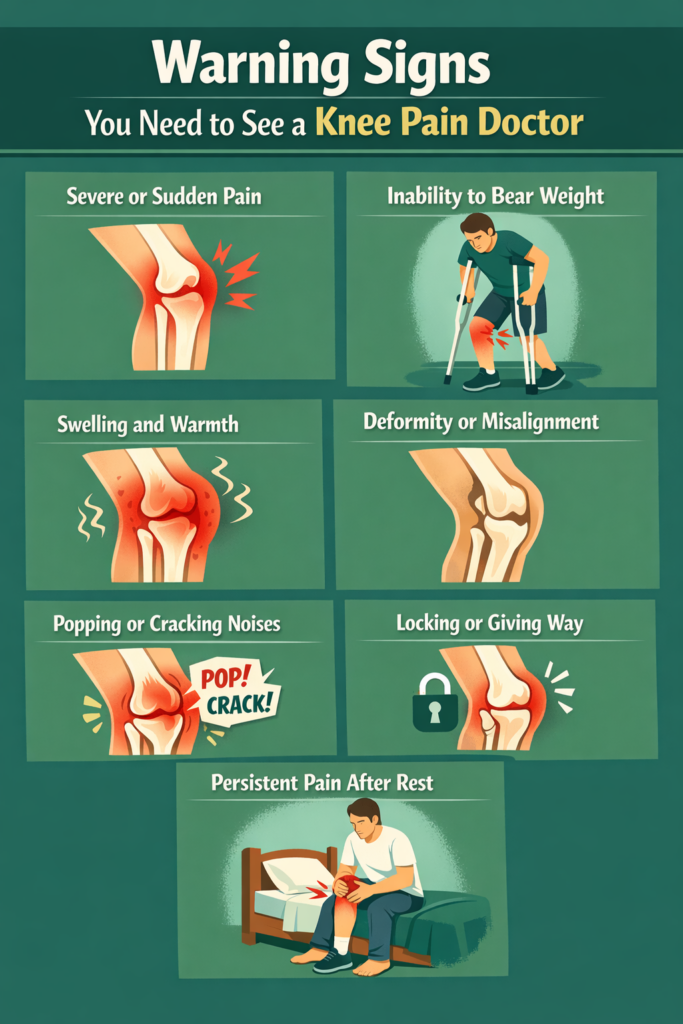
1. Severe or Sudden Pain
Pain that comes on suddenly or is intense can indicate a serious issue, such as a torn ligament or cartilage damage. If you experience sharp, severe pain that doesn’t subside after resting or icing, it’s important to seek medical attention. Severe pain, particularly after an injury or fall, could indicate a meniscal tear or a ligament rupture, such as an ACL injury, which requires prompt treatment.
2. Inability to Bear Weight
If your knee pain prevents you from bearing weight on the affected leg, it could be a sign of a significant injury. Conditions like fractures, ligament tears, or severe cartilage damage can make it impossible to walk or stand. If you find yourself limping or unable to walk without assistance, it’s time to see a doctor immediately.
3. Swelling and Warmth
Swelling around the knee joint is a common symptom of many knee injuries, including sprains, fractures, and tendinitis. However, if the swelling is accompanied by warmth or redness, it could indicate an infection or inflammation, such as bursitis or septic arthritis. Prompt medical attention is necessary to determine the cause and prevent further complications.
4. Deformity or Misalignment
If your knee appears deformed or misaligned, this is a serious concern and requires immediate care. Deformities such as visible dislocation, abnormal twisting, or a bent knee can indicate fractures or severe ligament injuries. In some cases, an urgent visit to a knee pain doctor near me may be needed to reset the joint or perform imaging tests to assess the damage.
5. Popping or Cracking Noises
Hearing a popping or cracking sound in your knee after an injury or while moving could indicate ligament or cartilage damage. A popping sound during movement, especially when accompanied by pain or swelling, may signal a torn ligament or meniscus. While some cracking sounds may be harmless, a popping noise with pain should not be ignored.
6. Locking or Giving Way
If your knee feels like it is “locking” or “giving way” during movement, it could be a sign of a serious mechanical problem in the joint, such as torn cartilage or a loose body within the joint. When your knee becomes stuck in a bent or straight position or feels unstable when walking, it is essential to get it checked by a knee pain doctor near me to prevent further injury.
7. Persistent Pain After Rest
If knee pain persists despite adequate rest, ice, and over-the-counter pain relievers, it’s time to seek medical advice. Ongoing pain can indicate an underlying condition, such as arthritis, a meniscal tear, or a stress fracture, which requires a proper diagnosis and treatment plan. A knee pain specialist can assess your condition and determine the best course of action to relieve pain and restore function.
When to Visit Scotch Plains Medical Center
If you’re experiencing any of the above symptoms or have concerns about your knee pain, it’s essential to visit a medical center with expertise in treating knee injuries. At Scotch Plains Medical Center, we specialize in diagnosing and treating knee pain and providing personalized physical care to help you recover safely and quickly.
Our team offers a range of services, from diagnostic imaging (X-rays, MRIs) to physical therapy, joint injections, and minimally invasive surgeries when necessary. We aim to help you return to your favorite activities, like walking, running, or golfing, as quickly and safely as possible.
Treatment Options for Knee Pain
When you visit a knee pain doctor near me, your treatment will depend on the type and severity of your injury. Common treatment options include:
Source: Tone and Tighten
- Rest and Ice: Often recommended in the early stages of injury to reduce swelling and pain.
- Physical Therapy: To restore strength, flexibility, and mobility.
- Medications: Anti-inflammatory drugs or pain relievers to manage symptoms.
- Injections: Corticosteroid or hyaluronic acid injections for inflammation or lubrication.
- Surgery: In cases of severe injury, surgical intervention may be required, such as an arthroscopy or ligament repair.
Take Action Early to Prevent Long-Term Knee Damage
Knee pain should never be ignored, especially if it’s severe, persistent, or accompanied by other concerning symptoms. By recognizing the warning signs and seeking treatment early, you can prevent long-term damage and ensure a quicker recovery. If you’re dealing with knee pain in North Jersey, visit Scotch Plains Medical Center for an evaluation from a local, trusted knee pain doctor near you. Our team is here to help you restore your mobility and get back to doing what you love.
People Also Ask
1. What causes knee pain after exercise?
Knee pain after exercise can be caused by overuse, improper form, or underlying conditions like tendinitis, patellofemoral pain syndrome, or bursitis. Rest and proper warm-up can help prevent it.
2. How do I know if my knee pain is serious?
If your knee pain is severe, prevents you from walking, or is accompanied by swelling, warmth, or visible deformity, it’s important to seek medical attention immediately.
3. What is the best treatment for knee pain?
Treatment for knee pain depends on the cause, but common approaches include rest, ice, physical therapy, medications, and in some cases, injections or surgery.
4. Can knee pain go away on its own?
Mild knee pain from minor injuries or overuse can improve with rest, ice, and gentle stretching. However, if the pain persists or worsens, professional evaluation is recommended.

Recent Posts
See All