

Why Does My Chest Hurt When I Cough, and Is It an Emergency?
Scotch Plains Medical Center
March 10, 2026 • 6min
That tight, achy feeling in your chest after a coughing fit is one of those symptoms that makes you pause. Sometimes it’s harmless. Other times, it’s your body telling you something deeper is going on. Knowing the difference can save you a lot of unnecessary worry — or, in some cases, a serious complication.
Chest pain during or after a cough is one of the most common reasons people seek care at walk-in clinics. And for good reason. The causes range from simple muscle fatigue to something that genuinely needs same-day attention.
What’s Happening When Your Chest Hurts While Coughing
Every time you cough forcefully, your chest and abdominal muscles contract hard. Do that dozens of times a day, which happens easily during a respiratory illness, and those muscles tire out and become sore. That’s the most common reason your chest feels tender when you cough: muscle strain, plain and simple.
But there’s more going on beneath the surface when bronchitis is involved.
Urgent care treatment for bronchitis is often what patients need when chest pain from coughing doesn’t improve on its own. Bronchitis causes the airways – the bronchial tubes that carry air into your lungs to swell and fill with mucus. That inflammation narrows the airway, makes breathing harder, and triggers a persistent, often productive cough. The relentless coughing then strains the muscles around the chest wall, creating that familiar soreness that worsens after a coughing fit or when you lie down.
According to the National Institutes of Health (NIH), acute bronchitis ranks among the top 10 most common outpatient illnesses in the United States, accounting for roughly 100 million medical visits every year. So if this sounds familiar, you’re far from alone.
Not All Chest Pain Is the Same
This is where things get important. Chest discomfort associated with bronchitis feels dull and painful, worsened by movement or coughing. That’s different from the kind of chest pain that signals something more serious, and your body usually makes the distinction fairly clear if you know what to look for.
Bronchitis-Related Chest Discomfort
The chest soreness from bronchitis is typically:
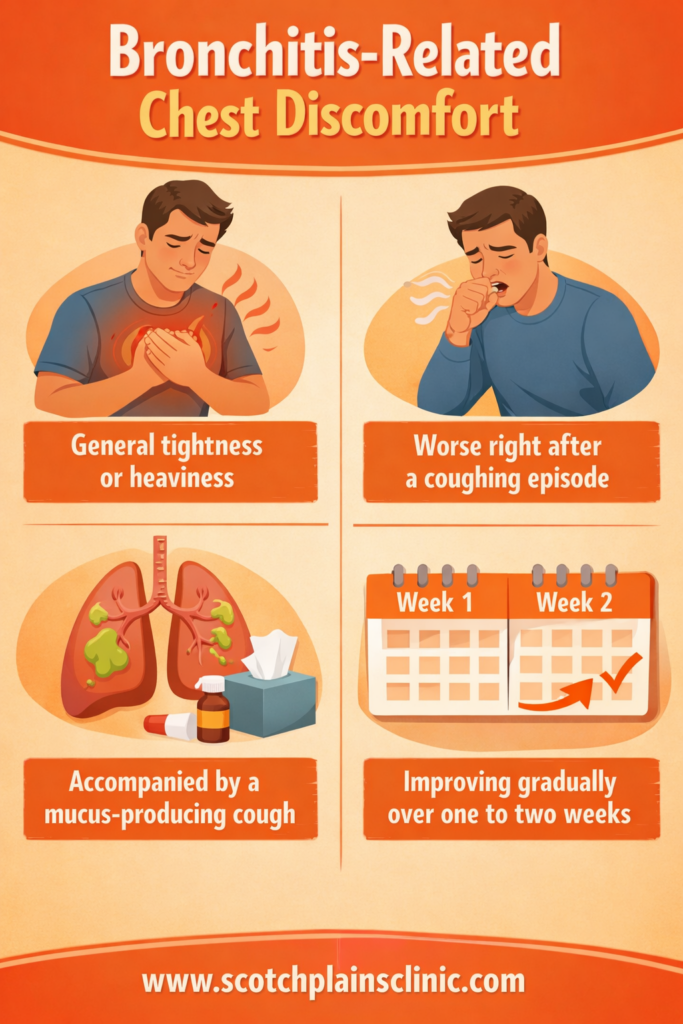
- A general tightness or heaviness, not a sharp stab
- Worse right after a coughing episode
- Accompanied by a mucus-producing cough, low-grade fever, or mild fatigue
- Improving gradually over one to two weeks
According to the CDC, most acute bronchitis symptoms resolve within three weeks. A mild cough, however, can linger for up to eight weeks in some people, even after the infection clears.
When Chest Pain Is a Sign of Concern
Sharp, stabbing chest pain when you breathe or cough deeply is a different story. That pattern is more consistent with pneumonia, a lower respiratory infection that goes deeper into the lungs and affects the air sacs rather than just the airways.
The distinction matters because pneumonia can become serious quickly. The warning signs that warrant same-day medical attention include:
- Sharp chest pain that worsens when breathing in or coughing
- Fever above 101°F, especially with chills or sweating
- Shortness of breath at rest (not just when moving around)
- Mucus that’s rust-colored, bloody, or foul-smelling
- Significant fatigue or worsening symptoms after a few days of illness
And there are symptoms that require emergency care immediately at the ER:
- Bluish or grayish lips or fingertips (a sign of dangerously low oxygen)
- Confusion or unusual mental fogginess, especially in older adults
- Severe difficulty breathing, such as gasping or inability to speak in full sentences
- Coughing up a significant amount of blood
If any of these apply to you or someone you’re with, call 911 or go to the ER right away.
Bronchitis vs. Pneumonia: How to Tell Them Apart
Most people (including healthcare providers) can’t tell the difference between bronchitis and pneumonia from symptoms alone. It’s just the nature of these two conditions. They share a lot of common ground.
What separates them:
Bronchitis affects the bronchial tubes (the airways) and feels like a chest cold. You’ll cough a lot, possibly bring up mucus, and feel run-down. But you’ll usually still function. A mild fever might come and go. The cough tends to be the loudest symptom.
Pneumonia infects the lungs themselves – the air sacs where oxygen passes into your bloodstream. It tends to hit harder. Body-wide symptoms like high fever, chills, and significant breathlessness are more pronounced. Some people also experience confusion, particularly older adults.
A chest X-ray is the only reliable way to confirm pneumonia. That’s one reason getting evaluated matters when symptoms seem beyond a typical chest cold. A provider can listen to your lungs, check your oxygen levels with a pulse oximeter, and determine whether imaging is needed – all in a single visit.
What Happens During a Bronchitis Evaluation
Knowing what to expect makes it easier to seek care sooner. At an urgent care visit, your provider will typically:
- Ask about the onset and progression of your symptoms
- Listen to your lungs for abnormal breath sounds like wheezing or crackling
- Check your oxygen saturation
- Assess whether a chest X-ray or other testing is needed to rule out pneumonia
Treatment depends entirely on what’s found. Most cases of acute bronchitis are viral, meaning antibiotics won’t help, and responsible providers won’t prescribe them unnecessarily. Relief typically comes from rest, fluids, a cool-mist humidifier, and over-the-counter medications to manage fever or discomfort. If there’s significant airway inflammation or wheezing, an inhaler may be recommended.
Who Needs to Be Extra Careful
Certain people are at higher risk of bronchitis progressing to pneumonia or becoming more complicated:
- Adults 65 and older
- Children under age 2
- People with asthma, COPD, or other chronic lung conditions
- Anyone with a weakened immune system
If you fall into one of these groups, don’t wait a full week before seeking care. Getting evaluated early can prevent a manageable respiratory infection from becoming something more serious.
Home Care That Helps
For straightforward bronchitis with manageable symptoms, these measures genuinely support recovery:
- Rest — your body needs energy to fight the infection
- Hydration — warm fluids help thin mucus and soothe irritated airways
- Humidifier use — adding moisture to dry indoor air (especially in winter) can ease breathing
- Steam inhalation — a hot shower or bowl of warm water with a towel over your head can loosen congestion
- Throat lozenges or honey — these provide temporary relief for throat irritation from coughing
Avoid cough suppressants unless your provider recommends them. Coughing helps clear mucus from your airways, which is part of how your body heals.
When to Visit Urgent Care in Scotch Plains
There’s a certain threshold between “rest and wait” and “this needs attention today.” If your chest pain from coughing isn’t from simple muscle soreness, or if your symptoms aren’t improving after a week, that’s the time to get seen.
Scotch Plains and the surrounding Union County area see a consistent surge in respiratory illnesses each fall and winter, when viruses spread more easily in close quarters. Walk-in urgent care gives you access to a same-day evaluation without the wait or expense of an emergency room, provided your symptoms aren’t life-threatening.
Don’t let uncertainty keep you at home with worsening symptoms. A quick visit can bring both answers and relief, and rule out anything that needs more attention.
Walk in or book an appointment online at Scotch Plains Medical Center today. Same-day care is available for bronchitis, chest pain evaluation, and respiratory illnesses.
People Also Ask
Q: Can muscle strain from coughing cause serious chest pain?
Yes, repeated forceful coughing can cause costochondritis – inflammation of the cartilage connecting the ribs to the breastbone. This can produce chest pain that feels surprisingly sharp or intense, but it’s not dangerous. It typically improves with rest and anti-inflammatory medications like ibuprofen.
Q: Is it normal for chest pain from bronchitis to last more than a week?
Mild chest soreness can persist for as long as the cough does, which may be several weeks even after the infection resolves. However, if the pain is worsening rather than improving, or is accompanied by fever or difficulty breathing, that pattern requires medical evaluation.
Q: Can anxiety or stress cause chest tightness with a cough?
Stress and anxiety can cause chest tightness on their own, and they can amplify the physical discomfort of a respiratory illness. If you’re dealing with a cough alongside significant anxiety, both aspects deserve attention – they’re not mutually exclusive.
Q: Does smoking make bronchitis chest pain worse?
Yes. Smoking irritates already-inflamed airways, prolongs the duration of bronchitis, and increases the risk of complications, including pneumonia. If you smoke and develop bronchitis frequently, that’s a conversation worth having with a healthcare provider.
Q: Can children get the same chest pain from coughing that adults do?
Yes, though children are less likely to describe it in detail. In kids, watch for reluctance to take deep breaths, unusual fatigue, rapid breathing, or high fever alongside a cough. Children under age 2 and those with underlying health conditions should be evaluated sooner rather than later.

Recent Posts
See All