

Is it Allergies or a Cold? Tips for Sore Throat Recovery in Scotch Plains
Scotch Plains Medical Center
February 2, 2026 • 6min
Sore throat or pharyngitis is one of the top complaints for which people seek medical attention. Especially when the seasons change, it may be the start of cold weather or the arrival of spring. However, at both times of the year, throat troubles can become very common. The question is how to pinpoint the cause of the sore throat. Is it a result of an allergy or a cold?
Both of these elements exhibit similar symptoms. However, it seems like it is always a guessing game to determine whether your sore throat is due to allergies or a common cold. Both allergies and a common cold can affect your throat. Despite this, it is worth understanding how these factors differ to help you recover more quickly. In this article, we will outline some things to watch for and offer insight into how to treat pharyngitis in Scotch Plains.
Understanding the Difference: Allergy or Cold?
Both viral infections, such as the common cold, and allergies may cause sore throats, though the underlying causes differ. The common cold is caused by a viral infection, while an allergy is caused by an overreaction of the immune system to an antigen, such as pollen or dust.
Cold Symptoms:
- Onset: Cold symptoms begin gradually. Colds frequently begin with a runny nose and congestion. A throat infection is often one of the first symptoms to appear.
- Duration: Cold symptoms may persist from a few days to a week. As the cold progresses, the sore throat may be replaced by coughing, congestion, and a runny nose.
- Other Symptoms: You may also get a low-grade fever, body aches, and exhaustion.
- Treatment: Rest, fluids, and over-the-counter pain relievers are usually prescribed for treating the common cold.
Allergy Symptoms:
- Onset: When allergy symptoms manifest, they can appear at a moment’s notice. This is particularly true during allergy seasons. When you’re in the area of Scotch Plains during peak pollen counts, you might develop pharyngitis in addition to a runny nose, sneezing, and itchy eyes.
- Duration: You will see symptoms for as long as you are exposed to that particular allergen, whether it is pollen in the spring or dust in your own home.
- Other Symptoms: Symptoms such as itchy eyes, sneezing, postnasal drip, and a stuffy nose are usually associated with allergies.
- Treatment: Antihistamines, nasal sprays, and other medications are the main options for relieving allergic symptoms.
How to Treat a Sore Throat
A sore throat treatment in Scotch Plains depends on the underlying cause of the pain, whether it’s from a cold or allergies.
1. Hydrate and Rest
It is important to drink plenty of fluids to soothe your throat, whether the problem is due to an allergy or a cold. Even teas with honey, broths, or plain water are effective in keeping your throat moist, thereby relieving discomfort. Getting enough rest is vital to helping your body heal the condition naturally.
2. Over-the-Counter Medications
For pharyngitis caused by a cold, you might want to try an over-the-counter medication. For instance, acetaminophen and ibuprofen are effective painkillers and reduce inflammation. If your condition is due to allergies, antihistamines like loratadine and cetirizine can help reduce symptoms such as sneezing and a runny nose.
3. Humidify Your Environment
Dryness can irritate your throat, especially if you are having a cold or allergies. A humidifier may help alleviate the dryness in your throat and nostrils. It is important to keep your humidifier clean to prevent mold growth, which can aggravate your allergies.
4. Saltwater Gargle
A basic remedy for relieving pharyngitis, whether from a cold or another cause, is a saltwater gargle. Salt is added to a glass of warm water, and the mixture is then gargled. This may help reduce swelling and kill bacteria.
5. Avoid Irritants
Regardless of the cause, whether it’s allergies or a cold, factors such as smoke, fragrances, and pollution can aggravate the pain. So, be mindful of your surroundings and try to avoid irritants as much as possible to relieve the pain.
Home Remedies for Sore Throat Relief
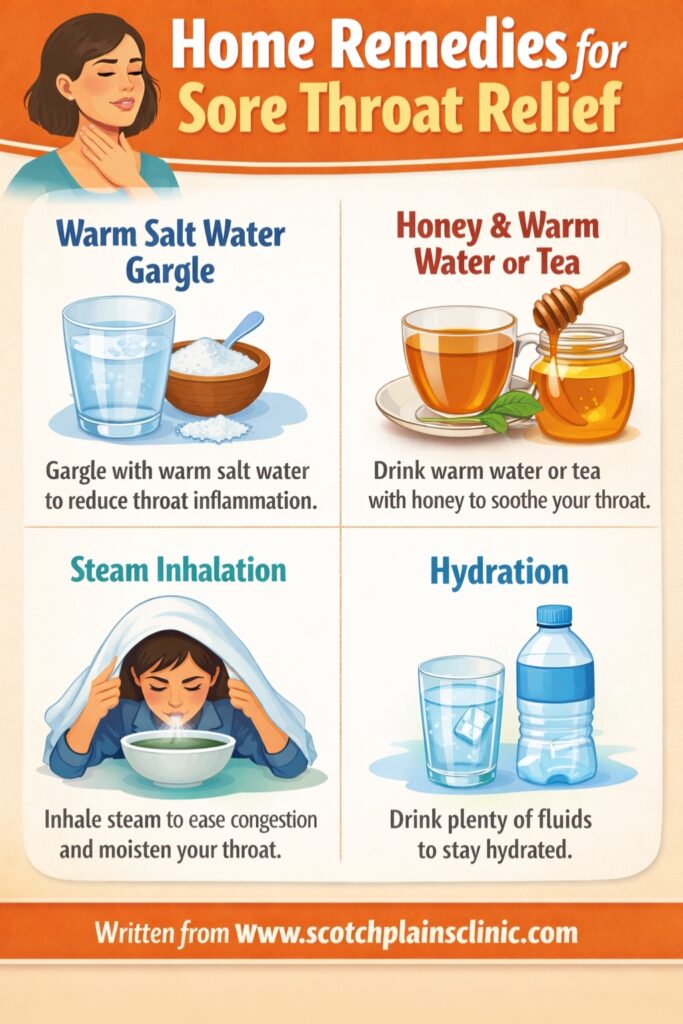
For pharyngitis, there are many home remedies that can provide relief and support healing without medication. Some of them can work wonders:
- Warm Salt Water Gargle: Dissolve half a teaspoon of salt in warm water, then gargle with the solution to soothe the throat. It helps reduce throat swelling and kills bacteria.
- Honey and Warm Water or Tea: Honey is also an antimicrobial agent that has been shown to soothe the throat. Try mixing it with water or herbal tea. One example is chamomile tea.
- Steam Inhalation: Inhaling the steam rising from a bowl of hot water may also help loosen mucus. As an alternative, you could also take a warm shower and inhale the steam.
- Hydration is Key: Drinking plenty of liquids such as water, herbal tea, and broths is essential, as it helps keep the throat moist and may reduce the risk of dehydration, which can otherwise exacerbate the pain.
- Herbal Lozenges or Throat Spray: Herbal lozenges are good for soothing the throat and are available over the counter. Some herbal lozenges contain ingredients such as eucalyptus, peppermint, and licorice that provide much-needed relief.
- Rest Your Voice: If your throat pain is due to overusing your voice, rest is essential. People should try to rest their voices by avoiding loud talking.
When to Seek Medical Help?
Although most sore throats are not serious and can be treated at home, there are some situations where you need medical care. If you encounter any of these, be sure to see a medical practitioner.
- Persistent Symptoms: If symptoms have persisted for more than a week without significant improvement, this may be cause for serious concern.
- High Fever: A temperature above 101°F, especially with pharyngitis, may indicate an infection and should be addressed.
- Difficulty Breathing: If there’s difficulty breathing or swallowing, this may indicate a more serious condition and requires immediate medical attention.
- Unclear Diagnosis: If you are unable to determine whether the symptoms are due to a cold, allergies, or something else, a qualified health professional can make a proper diagnosis.
Get Relief with Sore Throat Treatment in Scotch Plains
A sore throat can be brought about by an allergy or a cold. Both can be a nuisance, especially for the simplest of activities. It is essential to understand the difference between the two to ensure timely treatment.
If your symptoms persist and worsen, don’t hesitate to seek medical care. At Scotch Plains Medical Center, we are always here to assist you with your condition and help you get back into your busy life as soon as possible. Make an appointment today for the best treatment for your sore throat in Scotch Plains.
Questions People Ask About Sore Throat Recovery
What’s the main difference between a sore throat caused by a cold and one caused by allergies?
A cold-induced sore throat often comes with coughing, fever, and congestion. In contrast, allergies cause itching, sneezing, and nasal congestion, without the fever or body aches typical of a cold.
How can I treat a sore throat caused by a cold?
For cold-related sore throats, stay hydrated, rest, and use over-the-counter pain relievers. Gargling with warm saltwater or using a humidifier can help soothe irritation and promote faster recovery.
What are the best treatments for an allergy-related sore throat?
Treat allergy-related sore throats with antihistamines, nasal sprays, and by avoiding allergens. Hydration, saltwater gargles, and using a humidifier can also provide relief and reduce throat irritation caused by post-nasal drip.
Can I prevent sore throats from allergies?
Prevent allergy-related sore throats by identifying allergens and avoiding exposure to them. Use antihistamines or nasal sprays regularly, keep your home clean, and minimize outdoor exposure during allergy season to reduce the risk of irritation.
How long do sore throats from a cold last?
A sore throat from a cold usually lasts 3-7 days. As the cold progresses, symptoms such as congestion or coughing may worsen, while the sore throat gradually improves as the infection subsides.
When should I see a doctor for my sore throat?
See a doctor if your sore throat lasts more than a week, is severe, or comes with symptoms such as a high fever, difficulty swallowing, or breathing problems, as these could indicate a more serious condition.

Recent Posts
See All